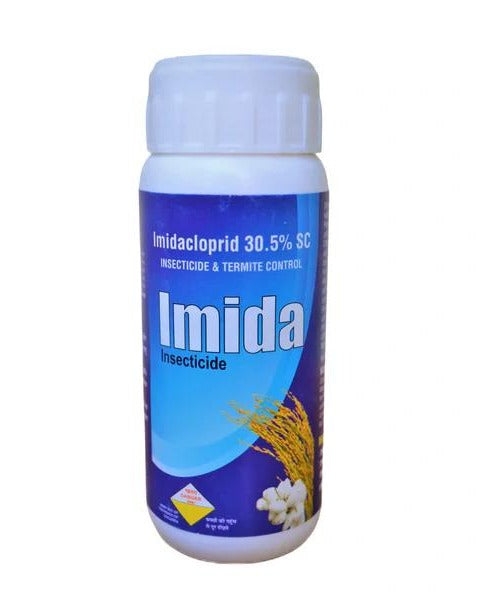
About Katyayani Imida Insecticide
Katyayani Imida (Imidacloprid 30.5% SC) is a systemic neonicotinoid insecticide with activity against sucking pests. It is applied as a foliar spray for the control of aphids, jassids and thrips in cotton, brown plant hopper and white-backed plant hopper in rice, and aphids and thrips in chilli. It works by disrupting nerve signal transmission in target insects, resulting in paralysis and death.
Katyayani Imida Insecticide Technical Name
Imidacloprid 30.5% SC
Product Specifications
Mode of Entry: Systemic
Mode of Action: Imidacloprid acts on the insect nervous system by disrupting nerve signal transmission, causing paralysis and death.
Time of Application: At the early appearance of sucking pest infestation.
Key Features & Uses
-
Systemic Action: Absorbed by the plant and provides protection within plant tissues.
-
Sucking Pest Control: Effective against aphids, jassids, thrips and planthoppers.
-
Broad Crop Utility: Recommended for Cotton, Rice and Chilli
-
Quick Pest Control: Disrupts nerve signal transmission in target insects.
-
Targeted Pest Management: Particularly suited for sap-sucking insect pests.
-
SC Formulation: Suspension Concentrate formulation suitable for foliar spray application.
-
Crop Safety: The supplied product information states no phytotoxic effect when used as recommended.
Katyayani Imida Insecticide Dosage & Recommended Crops
Crops |
Target insect pests |
Formulation (ml) / Acre |
Dilution in water / Acre (L) |
Dosage / L of water |
Waiting period |
Cotton |
Aphid, Jassids, Thrips |
24–30 |
200–300 |
0.12 ml |
26 days |
Rice (Paddy) |
Brown plant hopper, White-backed plant hopper |
24–30 |
200–300 |
0.12 ml |
37 days |
Chilli |
Aphids, Thrips |
50–60 |
200 |
0.25–0.30 ml |
5 days |
Method of Application
Foliar Spray: Mix the recommended quantity of Katyayani Imida with the required quantity of clean water and apply uniformly over the crop canopy using a suitable knapsack or power sprayer. Ensure adequate coverage of the foliage, particularly areas where sucking pests are actively feeding.
Best Time to Spray
- Apply at the first appearance of sucking pests.
- In Rice, pay particular attention to the plant base where planthoppers may congregate.
- Avoid spraying during strong winds or when rainfall is expected shortly after application.
Compatibility, Safety & Storage
Tank Mix Compatibility
Consult an agronomist before mixing Katyayani Imida with other crop protection products.
Safety Precautions
- Wear gloves, mask and full-sleeve protective clothing while mixing and spraying.
- Avoid contact with skin, eyes and clothing.
- Avoid inhalation of spray mist.
- Do not eat, drink or smoke while handling or applying the product.
- Wash hands, face and exposed skin thoroughly after spraying.
- Keep livestock away from treated areas.
- Keep the product out of reach of children and animals.
Bee Safety & Environmental Safety
- The product is used carefully around pollinators.
- Avoid spraying flowering crops when bees are actively foraging.
- Prevent spray drift into ponds and other water bodies.
Storage
Store in a cool, dry place away from direct sunlight, food and animal feed. Keep the container tightly closed and out of reach of children.
Katyayani Imida Insecticide Expert Advice
“For best results, apply Katyayani Imida at the recommended crop-wise dose at the early appearance of sucking pests. Ensure uniform foliar coverage, particularly on areas where aphids, jassids, thrips and planthoppers are actively feeding.” - BigHaat Agronomy Expert
Additional Information
- Follow IRAC resistance management guidelines.
- Avoid repeated applications of insecticides with the same mode of action.
Disclaimer: This information is provided for reference purposes only. Always follow the recommended application guidelines, registered crop recommendations, and safety instructions mentioned on the product label and accompanying leaflet.